Free Gift Included
SPEED IS BUILT. NOT BORN.
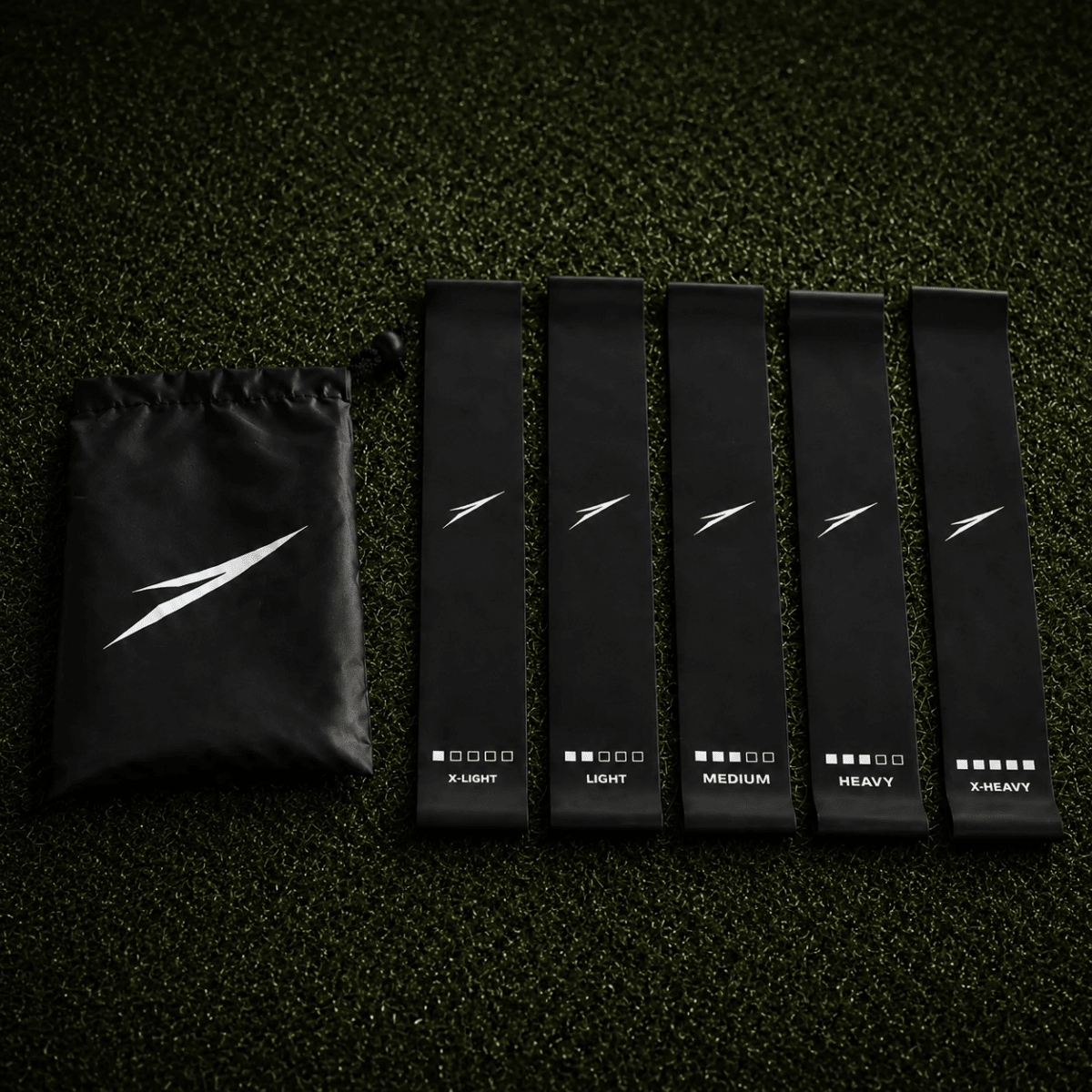
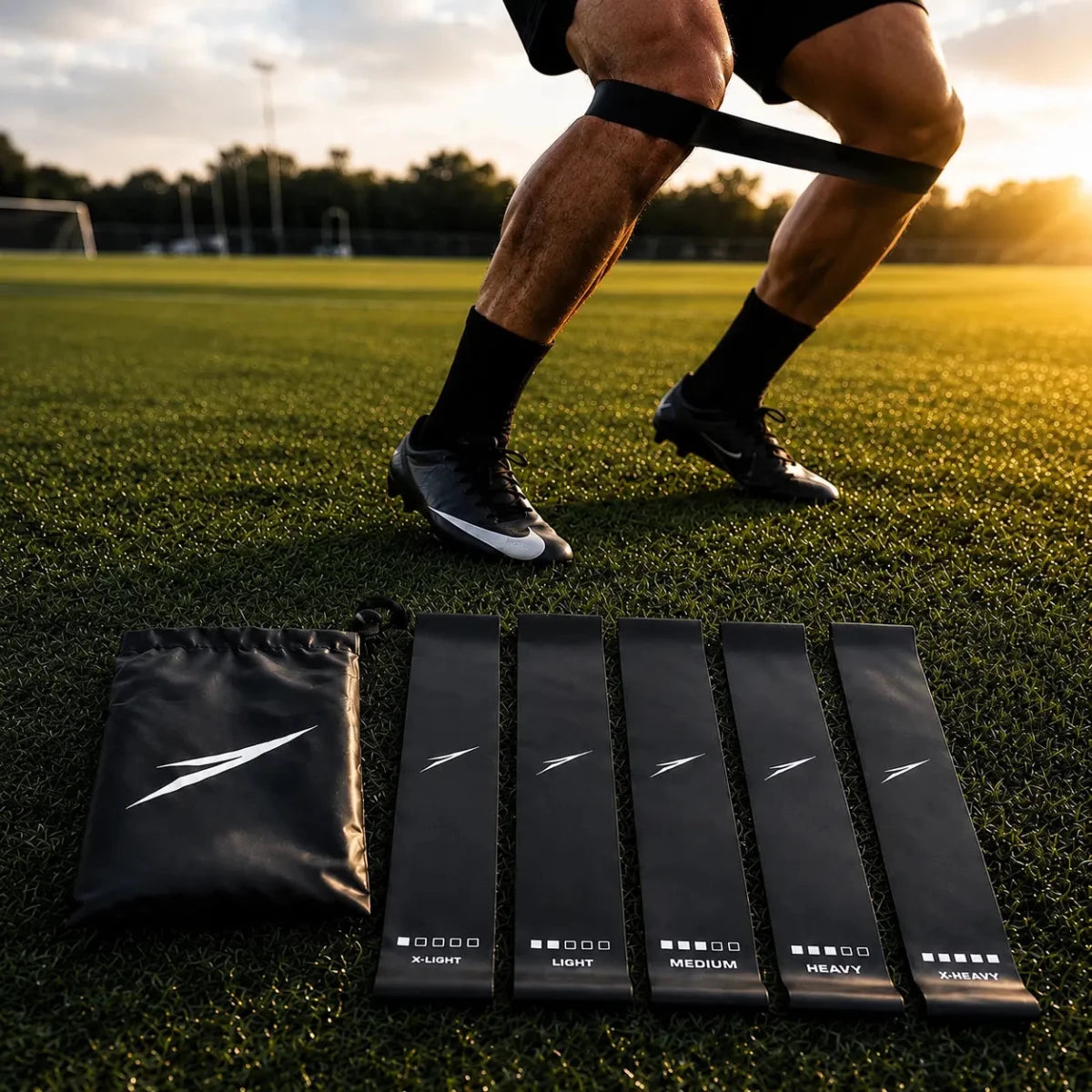
PROGRESSION BANDS
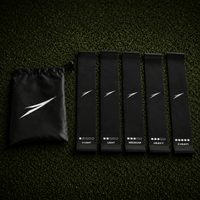
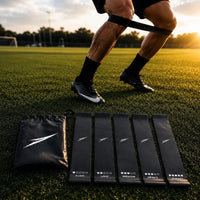
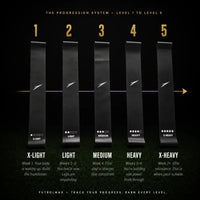
The progressive overload protocol behind Mbappé's speed training in 5 resistance levels.
Regular price
29.99
Regular price
29.99
Sale price
60.00
Unit price
per
Quantity
1
Couldn't load pickup availability
Free Shipping on orders over $55
TRUSTED BY 707,541+ ATHLETES
30-Day Returns
Secure Checkout
Free Gift Instantly Added to Cart
Try Before You Buy
30-Day Money Back Guarantee

"
I train my speed with resisted sprints. That first step doesn't come from talent. It comes from that work."
pairs perfectly with

90-Minute Mask
$24.99
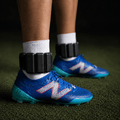
Ankle Weights
$34.99


Questions. Answered.
Everything you need to know before your first resisted sprint.
Acceleration. Sprinting against resistance forces your glutes, hamstrings and hip flexors to put more power into every stride. Take the band off and that same effort produces a faster first step. It's the difference between running hard and running fast.
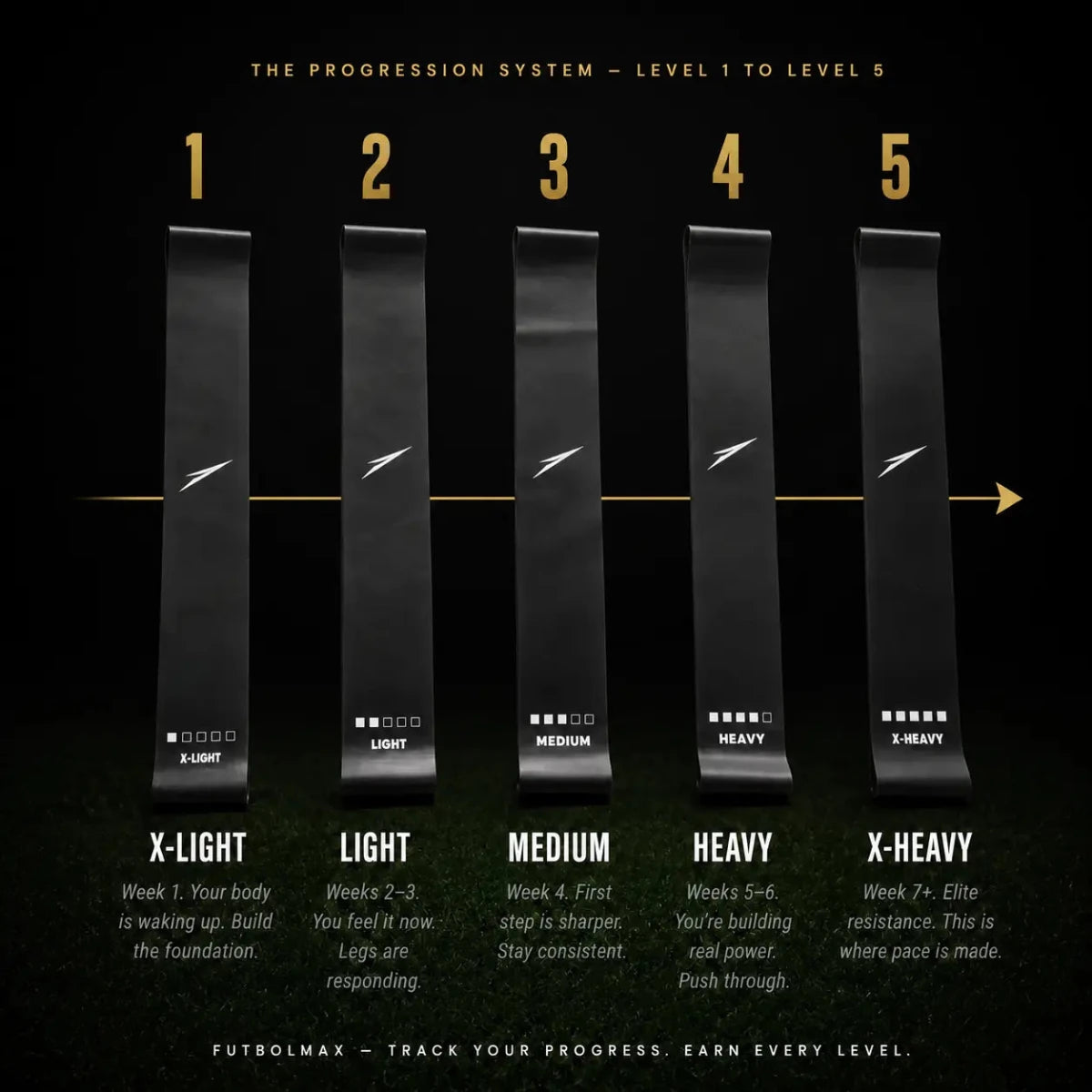
Because your body stops improving the moment a load stops challenging it. Fixed-resistance bands plateau within weeks. Five levels let you add resistance as you get stronger, which is what progressive overload means and why elite sprint programmes are built around it.
Most players start on Level 1 or 2. The rule is simple: if the band changes your running form, it's too heavy. Mechanics first, resistance second. Move up when the last sprint of a set stops feeling hard.
Two to three sessions a week on non-match days. Six to eight sprints of 20-30 metres with full recovery between each one. Speed work is about quality, not volume. More sessions won't make you faster, better ones will.
The power in your stride shows up in the first session, the moment you unclip the band and sprint free. Measurable gains in acceleration typically land at 4 to 6 weeks of consistent work, which is how long it takes the body to adapt to a new load.
No. The same resistance builds change of direction, lateral speed and jump power. Use them for shuffles, backpedals, and cutting drills. Lighter levels also work well as an activation warm-up before training or a match.
No. They work solo from a fixed anchor point, or with a partner holding the other end if you want variable resistance. Both setups train the same thing. Solo is easier to control, partner work is closer to game chaos.
Train with them for 30 days. If your speed hasn't improved, contact us with your order number for a full refund. We back the protocol because progressive overload is the one method that has never stopped working.
FASTER IN 30 DAYS.
4 phases. 30 days. One outcome.
Phase 1
Phase 2
Phase 3
Phase 4
PHASE 1
Days 1–7
ACTIVATION
Every stride feels heavier. That's the load doing its job.
PHASE 2
Days 8–14
FORCE DEVELOPMENT
More force in every push-off. Strides turn deliberate, then explosive.
PHASE 3
Days 15–21
SPEED TRANSFER
Take the band off. The power stays. Your first step is somewhere it wasn't three weeks ago.
PHASE 4
Days 22–30
PITCH DOMINANCE
Quicker off the mark. Winning duels you used to lose. Still running at 80 minutes.
WHY PROS CHOOSE THE SYSTEM
NOT ALL BANDS ARE
A SYSTEM. THIS ONE IS.

-
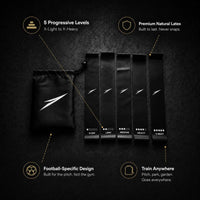
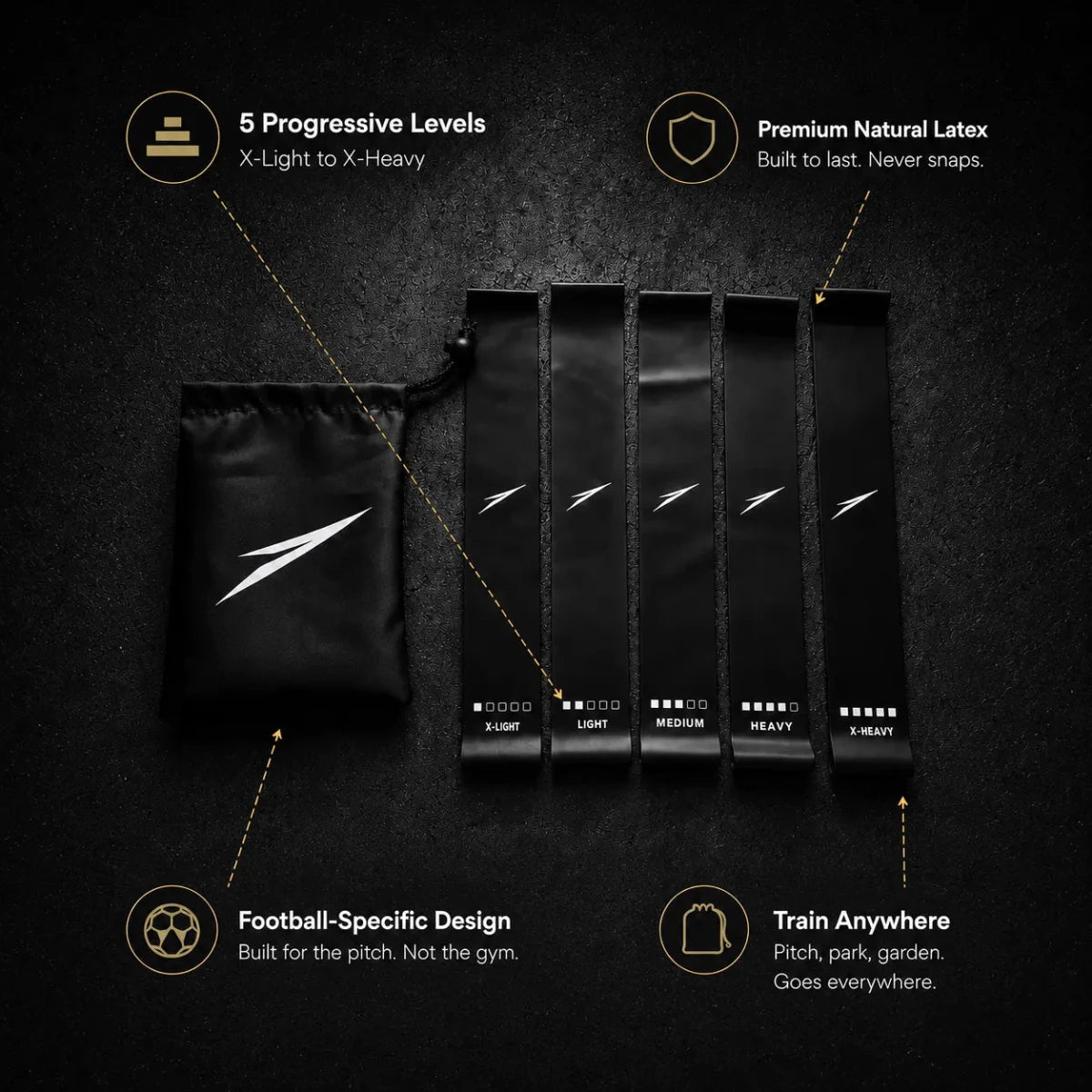
5 progressive levels. Built to grow with you.
-
Football-specific. Every rep built for the pitch.
-
Trains fast-twitch fibres for explosive first-step speed
-
Engineered to last. Won't snap after one session.
-
The progressive overload method elite academies use
- One resistance. No progression.
- Snaps under pressure
- No football context or drills
- No structure, no programme
- A general fitness tool. Not a system.
